Running mold trials with Hostacom PP compounds in China often hits unexpected roadblocks when your specified material gets stuck in customs or arrives weeks behind schedule. These delays don’t just push back your project timeline—they can derail entire product launches and strain relationships with Chinese mold makers who are waiting to start production.
Hostacom is LyondellBasell’s premium polypropylene compound family designed for lightweight engineering applications, offering glass-reinforced and mineral-filled grades that replace heavier materials like metals and traditional engineering plastics while maintaining structural integrity and surface quality.
I’ve worked with engineering teams who needed specific Hostacom grades for automotive interior panels and structural components. The key to successful trials lies in understanding which grade matches your application requirements and having reliable material access in China. Let me walk you through the technical considerations and practical solutions that will help you optimize your Hostacom injection molding trials.
Strategic Material Selection: Leveraging Hostacom PP Compounds for Lightweight Engineering
In engineering, material selection is a critical decision. I often see teams choose LyondellBasell’s Hostacom PP compounds as a strategic replacement for metal or other engineering thermoplastics. It’s a smart move for vehicle weight reduction and more.
A Superior Alternative
Engineers specify Hostacom for its impressive balance. It offers structural integrity for components once made of metal, yet it also provides the superior surface finish required for aesthetic parts. This versatility simplifies material inventories and streamlines production processes for many of my clients.
Density and Performance Advantages
The primary driver is its low density combined with high performance. This directly translates to lighter parts without compromising on mechanical strength. This is crucial in industries like automotive, where every gram saved improves fuel efficiency.
| Imóveis | Hostacom PP Compound | Polyamide 6 (PA6) | Alumínio |
|---|---|---|---|
| Densidade (g/cm³) | ~1.05 | ~1.14 | ~2.70 |
| Cost-Performance | Excelente | Bom | Moderado |
| Resistência à corrosão | Excelente | Bom | Pobres |
When evaluating metal replacement strategies, Hostacom PP compounds consistently emerge as a top contender. The decision isn’t just about weight; it involves complex factors including processing efficiency, design freedom, and system cost savings. It is a very popular lightweight engineering material.
Balancing Stiffness and Impact
One of the key challenges in lightweight engineering is maintaining performance. Hostacom grades are tailored to provide a specific balance between stiffness and impact resistance. Our clients often select specific grades to meet demanding crash-test or durability requirements without over-engineering the part. This precision is vital.
Processing and Mold Flow
The material’s reologia1 is another significant factor. Its flow characteristics allow for the molding of large, complex geometries with thin walls, which is difficult with some other materials. This enables innovative designs that integrate multiple functions into a single part, further reducing weight and assembly costs.
| Caraterística | Hostacom PP Compound | Acrylonitrile Butadiene Styrene (ABS) |
|---|---|---|
| Resistência química | Elevado | Moderado |
| Estabilidade UV | Good (with additives) | Pobres |
| Processing Temp (°C) | 190-230 | 210-240 |
Hostacom PP compounds offer a compelling case for lightweight engineering. They provide a strategic advantage by replacing heavier materials, delivering an excellent cost-performance ratio without sacrificing the structural or aesthetic qualities that modern applications demand.
When selecting a Hostacom grade, the first decision is often between glass-reinforced and mineral-filled types. Each offers distinct advantages tailored to specific application needs. Choosing the right one is critical for a successful mold trial and final part performance. It avoids costly revisions down the line.
Glass-Reinforced Grades
Hostacom glass fiber reinforced grades are engineered for applications demanding high stiffness and strength. The glass fibers act as a structural backbone within the polypropylene matrix. This makes them ideal for components that must withstand mechanical stress and maintain their shape under load.
Mineral-Filled Grades
Conversely, mineral-filled PP grades excel in dimensional stability and aesthetics. Fillers like talc or calcium carbonate reduce shrinkage and warpage. This ensures tight tolerances and a superior, uniform surface finish, which is often crucial for visible or cosmetic parts.
Comparação rápida
Here is a simple breakdown I use to help clients make an initial assessment:
| Caraterística | Glass-Reinforced Hostacom | Mineral-Filled Hostacom |
|---|---|---|
| Benefício primário | Strength & Stiffness | Estabilidade dimensional |
| Key Property | High Tensile Modulus | Low & Uniform Shrinkage |
| Acabamento da superfície | Can show fiber lines | Smooth, high quality |
| Caso de utilização típico | Structural brackets, housings | Acabamentos interiores para automóveis |
The choice isn’t always straightforward. While glass fibers provide excellent structural integrity, they can introduce challenges. The orientation of fibers during injection molding can lead to retração anisotrópica2, where the part shrinks differently in various directions. This can cause warpage, a common headache during mold trials.
Considerações sobre o processamento
Mineral fillers, being more isotropic, offer much more predictable and uniform shrinkage. This simplifies mold design and processing. Our tests show that for parts requiring precise assembly and a flawless appearance, mineral-filled Hostacom grades consistently deliver better results with fewer adjustments.
Making the Right Decision
I often advise clients to consider the part’s primary function. Is it a hidden structural component or a visible part that users will see and touch? Answering this question simplifies the material selection process significantly.
| Application Scenario | Recommended Hostacom Type | Motivo |
|---|---|---|
| Under-the-hood automotive parts | Glass-Reinforced | Needs high strength and heat resistance. |
| Interior door panels, consoles | Mineral-Filled | Requires excellent surface finish and fit. |
| Appliance support frames | Glass-Reinforced | Load-bearing function is critical. |
| Small electrical enclosures | Mineral-Filled | Dimensional accuracy for assembly is key. |
At MTM, we stock both types of Hostacom, allowing for rapid A/B testing during mold trials in China. This helps determine the best fit without international shipping delays.
Your choice between glass-reinforced and mineral-filled Hostacom depends on your priority. For structural performance, choose glass reinforcement. For dimensional accuracy and superior aesthetics, mineral-filled grades are the better option. Evaluate your project’s core requirements to make an informed decision.
Deep Dive into Specific Hostacom Grades: EK, ER, and TR Series Comparison
Selecting the right Hostacom grade is crucial for successful mold trials. The choice often comes down to balancing toughness and processability. The EK, ER, and TR series are designed for different application needs, and understanding their core distinctions prevents costly trial-and-error during molding.
Understanding the Core Series
The primary difference lies in their formulation focus. EK and ER grades are engineered for impact resistance, while the TR series is optimized for high flow. This fundamental trade-off guides initial material selection for any project.
Comparação rápida
A simple way to view these grades is by their primary strength. The following table provides a high-level overview we use to guide our clients.
| Série | Caraterística primária | Ideal Application |
|---|---|---|
| EK | Alta resistência ao impacto | Automotive bumpers, dashboards |
| ER | Balanced Impact/Stiffness | Interior trim, durable housings |
| TR | Excellent Flowability | Thin-walled parts, complex geometry |
This initial breakdown helps narrow down the options before diving into specific data sheets. It ensures the material’s properties align with the part’s functional requirements from the start.
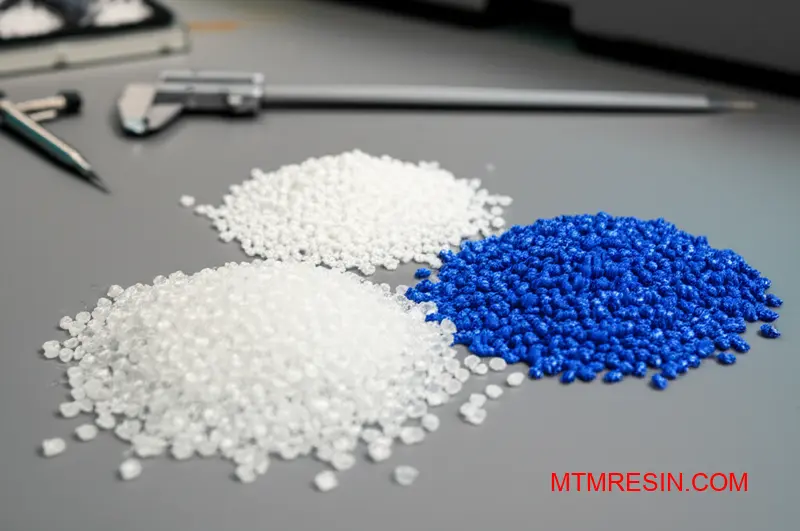
When we move beyond the high-level view, the decision becomes about specific application demands. The trade-off between mechanical strength and melt flow is a central theme in selecting an impact modified Polypropylene like a Hostacom grade.
Impact-Modified vs. Flow-Optimized Grades
The Hostacom EK series properties are defined by their superior toughness. These grades are typically a Copolymer3 formulation, which provides excellent impact absorption even at low temperatures. This makes them ideal for parts that must withstand collisions or drops, like automotive exterior components.
On the other hand, the Hostacom TR grade flow rate is its main advantage. These grades are engineered to fill complex molds with long flow paths or very thin walls. This high fluidity reduces injection pressure, prevents short shots, and allows for faster cycle times.
Practical Grade Selection Guide
Your choice depends directly on the part’s design. If you are molding a large, structural part that requires high durability, an EK or ER grade is the correct starting point. If your design features intricate details and thin sections, a TR grade is necessary to ensure the mold fills completely.
Based on our testing with clients, here’s a guide:
| Part Requirement | Recommended Hostacom Series | Why? |
|---|---|---|
| Elevada resistência ao impacto | EK Series | Maximizes energy absorption and durability. |
| Balanced Stiffness & Impact | ER Series | Offers a middle ground for multi-functional parts. |
| Long Flow Path / Thin Walls | TR Series | Ensures complete mold filling without high pressure. |
Having access to these different grades locally in China through MTM allows for rapid adjustments during mold trials, ensuring you can quickly test an alternative if the initial selection isn’t perfect.
Choosing the right Hostacom grade requires balancing the impact resistance of EK/ER series with the high flow of the TR series. The final decision should be driven by your part’s geometry and its end-use functional requirements to ensure a successful mold trial.
Critical Design Considerations for Hostacom: Shrinkage Rates and Tolerances
When working with Hostacom, managing shrinkage is a primary engineering challenge. Unlike some materials, its semi-crystalline nature means dimensional changes are significant. Ignoring these properties early in the design phase almost guarantees problems later on, impacting both part quality and project timelines.
The Nature of Hostacom Shrinkage
Hostacom polypropylene compounds exhibit higher shrinkage rates compared to amorphous polymers. This is due to their molecular structure. Precise control over molding parameters is therefore essential to achieve the desired final dimensions and avoid costly tool modifications.
Key Factors to Monitor
Several variables influence the final Hostacom shrinkage rate. From our experience, paying close attention to these details is critical for success.
| Fator | Impact on Shrinkage | Considerações sobre a conceção |
|---|---|---|
| Temperatura de fusão | Higher temps can increase shrinkage | Optimize for material flow without overheating |
| Temperatura do molde | Higher temps generally increase shrinkage | Balance cycle time with dimensional stability |
| Pressão de embalagem | Higher pressure reduces shrinkage | Apply sufficient pressure without causing flash |
| Filler Content | Fillers (e.g., talc) reduce shrinkage | Select grade based on stiffness and stability needs |
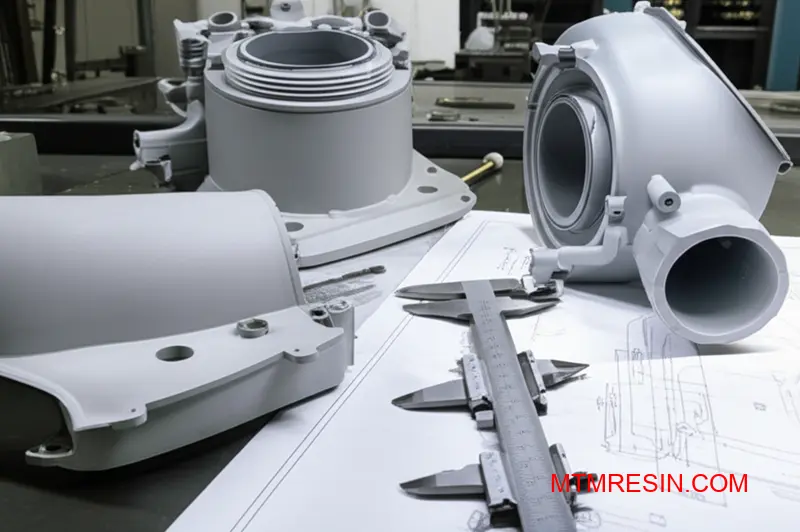
Understanding the behavior of Hostacom begins by comparing it to other material types. Its unique properties demand a tailored approach, especially during the crucial mold design phase. This is where many projects encounter preventable delays.
Semi-Crystalline vs. Amorphous Resins
Hostacom is a semi-crystalline material. During cooling, its polymer chains form organized, tightly packed structures. This process, which creates spherulites4, results in significant volume reduction and thus higher shrinkage. Amorphous resins like polycarbonate (PC) lack this organized structure, so they shrink less and more uniformly.
Designing for Anisotropy
A major challenge with Hostacom is that shrinkage is not uniform in all directions. It shrinks more in the transverse direction than in the direction of polymer flow. This anisotropy is a primary cause of warpage, especially in large, flat components.
Mold Design Allowances
When designing the mold, we always advise a "steel-safe" approach. This means dimensioning the cavity slightly smaller, making it easier to remove steel to enlarge it later. For large, flat parts, strategic gate placement and robust cooling channel design are non-negotiable for controlling the Hostacom shrinkage rate.
| Caraterística | Hostacom (Semi-Crystalline) | Amorphous Resin (e.g., PC) |
|---|---|---|
| Encolhimento típico | 1.0% – 2.5% | 0,5% - 0,7% |
| Shrinkage Pattern | Anisotropic (uneven) | Isotropic (uniform) |
| Risco de empenamento | High, especially in flat parts | Baixa |
| Design Focus | Managing differential shrinkage | General dimensional tolerance |
Successfully molding Hostacom hinges on understanding its semi-crystalline behavior and accounting for anisotropic shrinkage in your mold design. This proactive approach is key to preventing warpage, especially in larger parts, ensuring dimensional accuracy aligns with your initial engineering specifications.
Mastering Surface Aesthetics: Scratch Resistance and Low Gloss Solutions
Achieving a premium interior feel is crucial in modern automotive design. Consumers demand surfaces that are both visually appealing and durable. This means low gloss finishes that don’t reflect glare and high scratch resistance for longevity.
The Challenge of Traditional Methods
Painting parts adds steps, cost, and environmental concerns. It’s a common solution but not always the most efficient. Molded-in-color solutions offer a streamlined alternative, but material choice is critical to meet aesthetic standards directly from the mold.
Molded-in-Color Advantages
| Caraterística | Painted Surface | Molded-in-Color (e.g., Hostacom) |
|---|---|---|
| Process Steps | Molding + Painting | Apenas moldagem |
| Scratch Visibility | High (Substrate shows) | Low (Color is consistent) |
| VOC Emissions | Present | Nenhum |
| Custo | Mais alto | Inferior |
Materials like Hostacom are designed to provide these benefits, simplifying production while elevating quality.
Achieving ‘Class A’ Surfaces
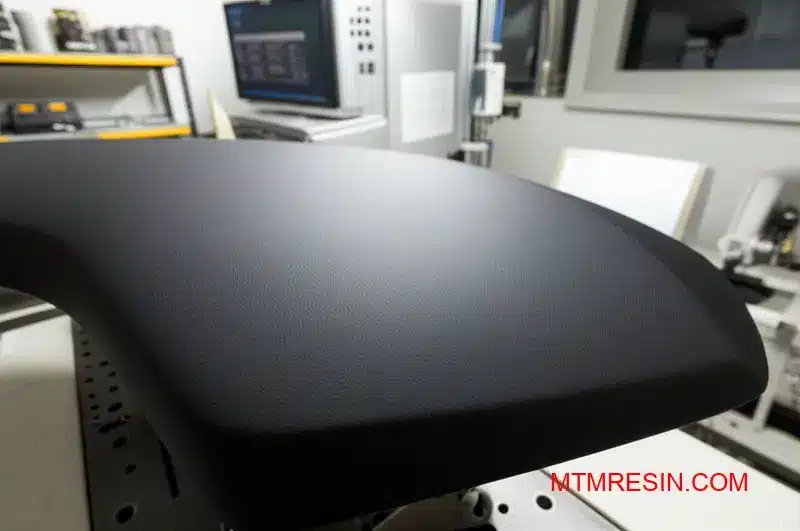
For components like dashboards and door panels, a ‘Class A’ surface is the goal. This means a flawless finish, free of defects. Achieving this without painting requires specialized materials. Hostacom’s low-gloss, scratch-resistant grades are specifically engineered for this purpose.
These grades use advanced talc fillers and modified polypropylene matrices. This combination disrupts light reflection for a deep matte finish. It also enhances surface hardness, significantly improving durability against daily wear and tear.
Beyond Material: Process is Key
However, simply choosing the right material isn’t enough. I’ve seen projects where excellent materials produced poor results due to incorrect processing. Mold temperature, injection speed, and pressure are critical variables that dictate the final surface quality. A poorly controlled process can lead to gloss variations or flow marks.
This is why having the right material for trials is so important. At MTM, we stock grades like Hostacom in China, so teams can quickly validate both the material and their process without international shipping delays. This ensures the final part has the desired resistência ao mar5.
Parâmetros-chave de processamento
| Parâmetro | Impact on Low Gloss Finish | Ação recomendada |
|---|---|---|
| Temperatura do molde | Too low can cause flow lines | Increase for better replication |
| Velocidade de injeção | Too fast can create shear burn | Optimize for smooth fill |
| Pressão de retenção | Affects sink marks and gloss | Adjust to balance aesthetics |
Achieving a premium, paint-free surface finish relies on a dual strategy. Select advanced materials like Hostacom for their inherent low-gloss and scratch-resistant properties. Also, precisely control molding parameters, as they are equally crucial for a ‘Class A’ outcome.
Mold Temperature Management: Cooling Strategies for Cycle Time Reduction
The cooling phase is where efficiency is often won or lost. Proper mold temperature control directly impacts cycle time and part quality. For many common materials, including certain Hostacom grades, a mold temperature between 30°C and 60°C is a standard starting point.
The Temperature-Time Trade-Off
Lowering the mold temperature accelerates solidification, which shortens the cycle time. However, this rapid cooling can negatively affect the material’s crystallization rate. This creates a critical trade-off between manufacturing speed and the final part’s dimensional stability and performance.
Impact on Key Metrics
| Temperatura do molde | Tempo de ciclo | Cristalinidade | Shrinkage Stability |
|---|---|---|---|
| Low (e.g., 30°C) | Mais rápido | Inferior | Less Stable |
| High (e.g., 60°C) | Mais lento | Mais alto | More Stable |
Achieving the right balance requires careful adjustment. Rushing the cooling process can lead to post-molding issues that negate any time saved. Efficient cooling strategies are about finding that optimal point.
Deeper Dive into Cooling Dynamics
Optimizing cycle time isn’t just about making the mold colder. A critical aspect is uniform cooling. Non-uniform temperatures across the mold cavity create internal stresses as different sections of the part shrink at varying rates. This can lead to warpage, especially in complex geometries.
Crystallization and Performance
For semi-crystalline polymers like polypropylene, which is a base for many Hostacom compounds, allowing sufficient time for crystallization is vital. A higher degree of crystallinity improves mechanical properties like stiffness and the part’s Temperatura de deflexão térmica6. A part cooled too quickly may appear fine initially but fail under thermal load.
Practical Application in Mold Trials
During mold trials, we often start at the higher end of the recommended temperature range to establish a baseline for part quality. Then, we gradually reduce the temperature and cooling time, monitoring key dimensions and performance metrics to find the fastest cycle that doesn’t compromise the final product integrity.
This methodical approach prevents costly mistakes. Sacrificing part stability for a slightly faster cycle is a poor trade-off that can lead to field failures. We confirm with clients that a stable process is always the priority over a merely fast one.
Effective cooling is a balancing act. While lower mold temperatures reduce cycle time, they can compromise part stability and performance. The goal is to find the fastest possible cycle that still allows for adequate material crystallization and dimensional consistency.
Managing Fiber Orientation in Glass-Filled Hostacom Applications
Working with glass-filled Hostacom for structural parts presents a unique challenge. The material’s strength is highly dependent on how the glass fibers align during injection molding. If fibers are not oriented correctly, it can lead to significant issues with both part strength and dimensional stability.
The Challenge of Fiber Alignment
The primary issue is that fibers align with the direction of the molten polymer flow. This creates a part that is strong in one direction but weaker in another. This behavior makes predicting final part performance difficult without careful process control.
Impact on Part Integrity
Improper fiber orientation directly affects part quality. It can cause warpage, weak spots, and an overall failure to meet structural requirements. Managing this is critical for success.
| Imóveis | Aligned Fibers (Flow Direction) | Transverse Fibers (Cross-Flow) |
|---|---|---|
| Resistência à tração | Elevado | Baixa |
| Retração | Baixa | Elevado |
| Risco de empenamento | Baixa | Elevado |
How Flow Direction Dictates Strength
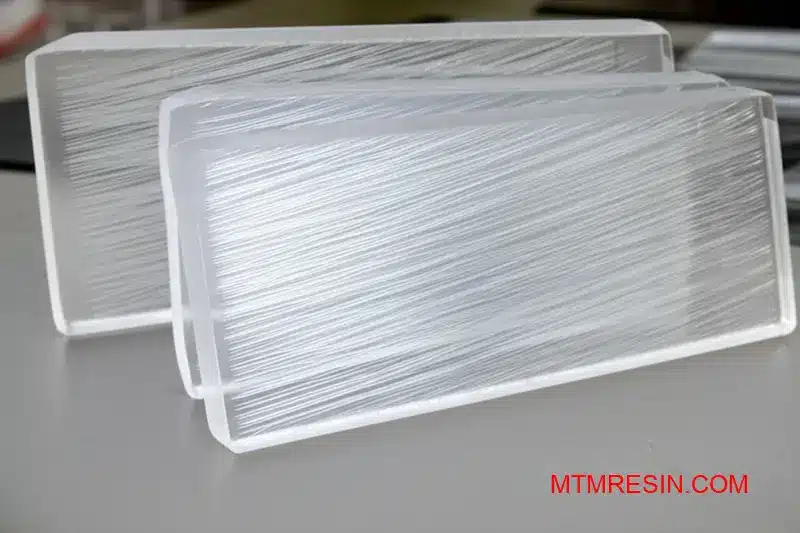
The direction of molten polymer flow is the single most important factor controlling glass fiber alignment. When molding structural parts with Hostacom, fibers act like logs in a river, orienting themselves parallel to the flow. This alignment maximizes strength and stiffness along the flow path.
However, it creates a weakness perpendicular to the flow. This is a critical trade-off. We often advise clients on gate placement to manage this effect. A poorly placed gate can lead to unpredictable performance, even if the part design seems robust.
Gate Placement Strategies
Gate location is your primary tool for controlling fiber orientation. Placing a gate at the end of a long, thin part encourages fibers to align along its length, maximizing its beam strength. In contrast, gating in the center of a flat part can cause radial flow and complex stress patterns.
Where two polymer flow fronts meet, a Weld line7 forms. At this junction, fibers align poorly, creating a visible and mechanically weak seam. We’ve seen parts fail at these lines under much lower stress than expected.
| Gate Position | Typical Flow Pattern | Resulting Fiber Orientation |
|---|---|---|
| Porta de borda | Linear | Unidirectional (strong along length) |
| Center Gate | Radial | Divergent (circular pattern) |
| Multiple Gates | Complex | Can create multiple weld lines |
Managing fiber orientation is crucial for glass-filled Hostacom. Gate location dictates flow direction, which aligns fibers. This alignment determines the final part’s strength and dimensional stability. Careful planning is essential to prevent warping and weak spots in structural applications.
Under-the-Hood Applications: Thermal Stability and Chemical Resistance
The engine bay is one of the most demanding environments for any plastic component. Constant heat, vibration, and exposure to harsh fluids can quickly degrade materials. This is where Hostacom PP compounds really prove their value for under-hood plastics.
Key Demands of the Engine Bay
Components like HVAC housings and battery covers must maintain their structural integrity over the vehicle’s lifetime. They require a material that balances stiffness, impact strength, and long-term stability without failing under stress. Hostacom is engineered for this exact purpose.
Suitable Applications
We often recommend specific Hostacom grades for these parts during mold trials. The material selection is critical for performance and safety.
| Componente | Primary Requirement |
|---|---|
| HVAC Housing | High Heat Deflection Temperature |
| Battery Cover | Resistência química |
| Fan Shroud | Stiffness and Thermal Stability |
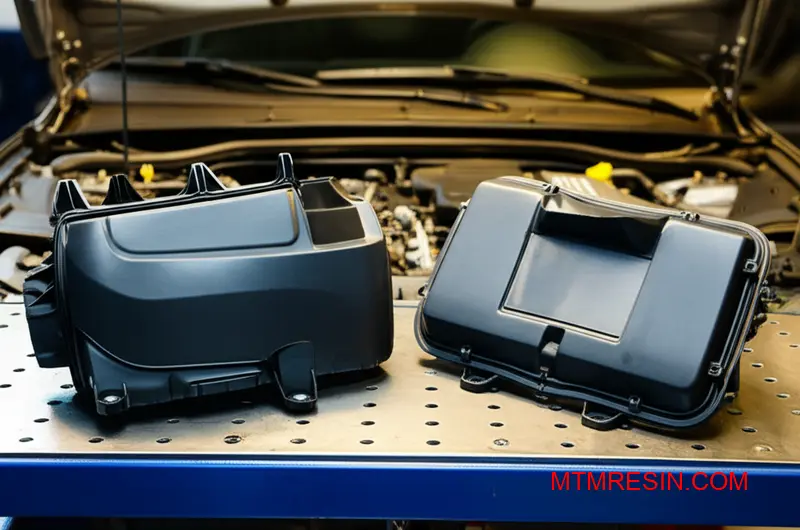
For under-the-hood applications, two properties are non-negotiable: thermal stability and chemical resistance. These factors directly influence the reliability and lifespan of a part. At MTM, we ensure the Hostacom grades we stock in China meet these stringent automotive requirements.
Assessing Thermal Performance
The Heat Deflection Temperature (HDT) is a critical metric for under-hood plastics. It indicates the temperature at which a material begins to deform under a specific load. Hostacom grades offer a high heat deflection temperature, essential for parts located near the engine block. Understanding the material’s Temperatura de transição vítrea8 also helps predict its behavior.
Evaluating Chemical Resistance
Automotive fluids can be highly corrosive. A material must withstand prolonged contact without swelling, cracking, or losing its mechanical properties. Hostacom provides excellent chemical resistance automotive performance, making it a reliable choice for battery trays and fluid reservoirs.
| Fluid Type | Hostacom PP Resistance |
|---|---|
| Engine Oil | Excelente |
| Antifreeze / Coolant | Excelente |
| Battery Acid | Muito bom |
| Fluido dos travões | Bom |
This ensures components maintain integrity even when exposed to leaks or spills, a common concern I’ve seen in part validation. Having the right material ready for trials in China avoids costly delays.
Hostacom’s excellent thermal stability and chemical resistance make it a top choice for demanding under-hood applications. It ensures components like HVAC housings and battery covers maintain their integrity and performance, contributing to overall vehicle reliability and safety in harsh engine bay environments.
Cost-Benefit Analysis: Hostacom vs. Engineering Plastics (PA6, PBT)
Beyond Cost-Per-Kilogram
Procurement managers often focus on the price per kilogram. However, this metric can be misleading when evaluating materials. The true cost is revealed when you analyze the cost per finished part, where material density plays a crucial role.
The Specific Gravity Advantage
Hostacom, a polypropylene compound, has a significantly lower specific gravity than engineering plastics like PA6 or PBT. This means you get more volume of material for the same weight, which translates directly into producing more parts from each kilogram purchased.
| Material | Typical Specific Gravity (g/cm³) |
|---|---|
| Hostacom (PP Compound) | ~0.90 – 1.05 |
| PA6 (Unfilled) | ~1.14 |
| PBT (Unfilled) | ~1.31 |
Calculating True Cost-Per-Part
A more accurate metric for material cost analysis is the volumetric cost. You can create an index by dividing the price per kilogram by the material’s specific gravity. This reveals the actual cost to produce a part of a fixed volume.
A Practical Comparison
Based on our analysis of common grades, Hostacom’s density is often 20-30% lower than that of PA6 or PBT. This lower density is a fundamental characteristic of its base polymer, Isotactic Polypropylene9. This difference provides a direct and substantial reduction in material consumption for the same number of manufactured parts.
| Caraterística | Hostacom | PA6 | PBT |
|---|---|---|---|
| Price/kg Index | 100 | 120 | 130 |
| Specific Gravity | 0.95 | 1.14 | 1.31 |
| Volumetric Cost Index | 105 | 105 | 99 |
Note: The table uses an index for illustrative purposes.
At MTM, we supply these materials for trials. This allows your team in China to validate these production cost reduction calculations with actual mold tests, ensuring your procurement decisions are based on solid data.
Choosing Hostacom offers a significant cost-per-part saving due to its lower specific gravity compared to PA6 and PBT. This makes it a financially compelling choice for many applications, moving beyond the simple cost-per-kilogram analysis for smarter procurement.
Accelerate Your Hostacom Mold Trials with MTM
Ready to trial Hostacom grades in China? Let MTM pre-stocked solutions eliminate delays, ensure brand-specified PP compounds, and streamline your injection molding optimization. Send your inquiry now—get matched Hostacom materials for your mold tests without the risk, cost, or wait. Act today for reliable results!

-
Discover how this property is crucial for optimizing the injection molding of complex components. ↩
-
Understanding this helps predict and control part warpage in fiber-filled materials. ↩
-
Explore how copolymer structures directly influence the impact strength and processing behavior of polypropylene compounds. ↩
-
Understanding spherulite formation helps predict and control the final mechanical properties of the part. ↩
-
Explore how this property impacts the long-term visual quality and durability of polymer surfaces in daily use. ↩
-
Understanding this value helps predict part performance under thermal stress, which is crucial for many applications. ↩
-
Understanding weld lines helps engineers predict and mitigate weak points in molded parts. ↩
-
Learn how this property impacts material stiffness, essential for designing durable automotive parts. ↩
-
Learn how a polymer’s molecular structure impacts material density and final part performance. ↩